Burger Joint Instagram Ads in the GCC: Why 'Smash' Beats 'Gourmet'
The visual language of a fast-casual burger chain in Riyadh or Dubai isn't the same as a fine-dining steakhouse. Here's how to tell them apart in your creative.
From the Memm Editorial Team
Original guides on Arabic ad design, MENA campaign strategy, and bilingual creative direction.
Burger Joint Instagram Ads in the GCC: Why "Smash" Beats "Gourmet"
A burger restaurant owner in Dubai walks into their Instagram Insights at 2 AM. Their ad posted at 8 PM has 47 saves and 230 likes, but only 12 people clicked through to their Zomato link. A steakhouse owner in Riyadh watches their identical layout get 8 saves and 190 likes — but 67 people clicked through. Same format. Same platform. Same audience timezone. Different creative vocabulary.
The difference isn't luck. Burgers sell on velocity, casualness, and appetite-triggering close-ups. Steaks sell on craft, sear-crust detail, and plating ceremony. When a burger ad copies steakhouse composition — wide shot of the plate, dramatic lighting, cutlery positioned like a painting — it reads as confused. When a steakhouse ad copies burger energy — chaotic toppings, explosion-freeze frames, oversaturated color — it reads as cheap. The same visual language kills the sale it's designed for. This article explains the visual vocabulary difference, the three composition patterns that actually work for burger chains in the GCC, and why your competitors who are crushing it on Zomato are using a different frame count than you are.
Why burger ads need their own language
Burgers are fast-casual, not fine-dining. That difference compounds across every pixel of the design.
First, the consumption moment is right now. A burger diner in Riyadh doesn't research for two weeks. They open Instagram at 12:45 PM hungry, see your ad, and decide in 3 seconds whether they'll swing by your location on their lunch break. A steakhouse diner, by contrast, books ahead. They're planning an anniversary, a business dinner, or a family milestone. They research, read reviews, and commit to a price point. The ad is a teaser, not a trigger. A burger ad triggers appetite. A steakhouse ad confirms a decision already made.
Second, the ingredient visibility norm is opposite. Burger enthusiasm in the GCC comes from toppings visibility — the tomato, the lettuce, the melted cheese, the caramelized onions, the special sauce dripping. The more toppings visible, the more appetite-provoking the ad. A steakhouse live fire is the hero; the side dishes are secondary. A burger's toppings are the hero; the meat patty is a supporting player. (This flips for international steakhouses that lead with crust or marbling, but GCC fine-dining steakhouses lead with the sear and the plating ceremony, not the raw meat.)
Third, the motion energy is calibrated differently. Burger ads thrive on quick cuts, ingredients bouncing, sauce dripping in real time, a hand reaching in to grab. Steakhouse ads thrive on slow dolly, knife cutting through with audio focus, the plating moment. A burger ad that moves slow reads as stalled appetite. A steakhouse ad that jump-cuts reads as chaotic.
This isn't opinion. This is the difference between Smashburger's GCC campaigns (fast cuts, close-ups) and Nusr-Et Steakhouse's Middle East content (wide shots, deliberate pacing). Both crush engagement in their category. Neither would work if they swapped creative vocabularies.
The three winning compositions for burger ads
1. The Overhead Smash (Wide Shot of the Assembled Burger, Top-Down)
This is the most common opener for burger chains in the GCC. The entire assembled burger sits on the plate, photographed from directly above. You see the top bun, the stack of toppings, the sauce, the side (fries, coleslaw, pickles). The angle is generous — it says "this is a full meal, and you can see every component."
Why it works: The overhead angle lets you show toppings density without the burger toppling over (a common problem with side-angle shots on Instagram). It reads as abundant. For SMBs running their own food photography, this angle is forgiving — you don't need studio lighting to make it work, just an overcast window and a plain background.
When to use it: First carousel slide. Product intro. New menu item launch. Also works well as a static image (not a video) because the composition is clean and the eye can rest on the whole burger without motion distraction.
Common mistake: Placing the burger too close to the edge. The safe zone for Instagram feed is roughly the center 70% of the frame. If your burger's most interesting topping touches the edge, it crops on mobile. Keep the burger centered and leave 15% padding on all sides.
2. The Close-Up Sauce Reveal (Macro, Sauce Dripping or Oozing)
This is the velocity shot. The camera zooms to the edge of the burger — usually the side, sometimes the top — and captures a close-up of the cheese melting, the sauce dripping, or the ingredients layered. Often paired with motion: a fork or hand pulling the burger apart, or a slow-motion sauce drip. The framing is tight, maybe 40% of the frame is burger, 60% is negative space to not overwhelm the scroll.
Why it works: This shot hijacks appetite hormones. Melted cheese and sauce are appetite triggers that work across all MENA food cultures. The close-up reads as "this is premium, we're proud of the details." For Zomato and Talabat links, this composition converts because it says "we didn't cut corners on toppings."
When to use it: Second or third carousel slide (not the opener; establish the whole burger first). Reels and Stories as well. Works beautifully as a video shot (2–3 second loop of sauce dripping).
Common mistake: Using artificial sauce (syrups, fake cheese) that doesn't photograph naturally. If you're using styling tricks (hot water under a burger to fake steam, paint to fake char), the close-up will reveal it. The close-up shot is a test of ingredient quality.
3. The Lifestyle Bite (Hand + Burger + Blurred Crowd or Setting)
This is the "someone is eating right now" shot. A hand holds the burger mid-bite, or raises it toward the mouth, and the background is blurred — usually other diners, a table setting, the restaurant interior. The burger is sharp; the background is bokeh. The energy is immediate and social.
Why it works: It removes the abstract product-shot distance. Instead of looking at a burger, the viewer is experiencing eating with a community. This is especially powerful for restaurant chains with seating (a sit-down fast-casual like Smashburger) versus drive-through. The setting confirms "people want this burger enough to sit down and enjoy it publicly."
When to use it: Third carousel slide, or as a Stories/Reels shot after the product close-ups. Works best if you have multiple hands, multiple people — it says "this is social."
Common mistake: Using stock photos of hands. Burgers are hyperlocal. A hand in a burger ad that doesn't match your actual diner demographic reads as inauthentic. Use real photos of real customers (with permission, or blur faces). MENA audiences are sensitive to casting authenticity in food ads.
The bilingual layout rule for burger ads
If your burger chain serves both Arabic and English menus, or attracts both Arabic-speaking and English-speaking customers (common in Dubai, Jeddah, Riyadh), your burger ad needs text. Here's the rule: place Arabic text on the left, English text on the right. Both should point toward the burger, not away from it.
Wrong: Arabic on the right pointing away from the burger, English on the left, both dead-center. Your eye bounces between competing text blocks instead of resting on the burger.
Right: Arabic on the left (RTL reader's natural entry), English on the right, both in the safe-zone margins, both pointing toward the burger in the center. The burger is the anchor; the text is the supporting cast.
If you're using Memm to generate your burger ad and you want both languages, specify "Arabic + English layout, text right-to-left on left margin, product centered." Memm will route the generation to Nano Banana Pro (the model that handles Arabic rendering reliably at the detail level a burger photo needs).
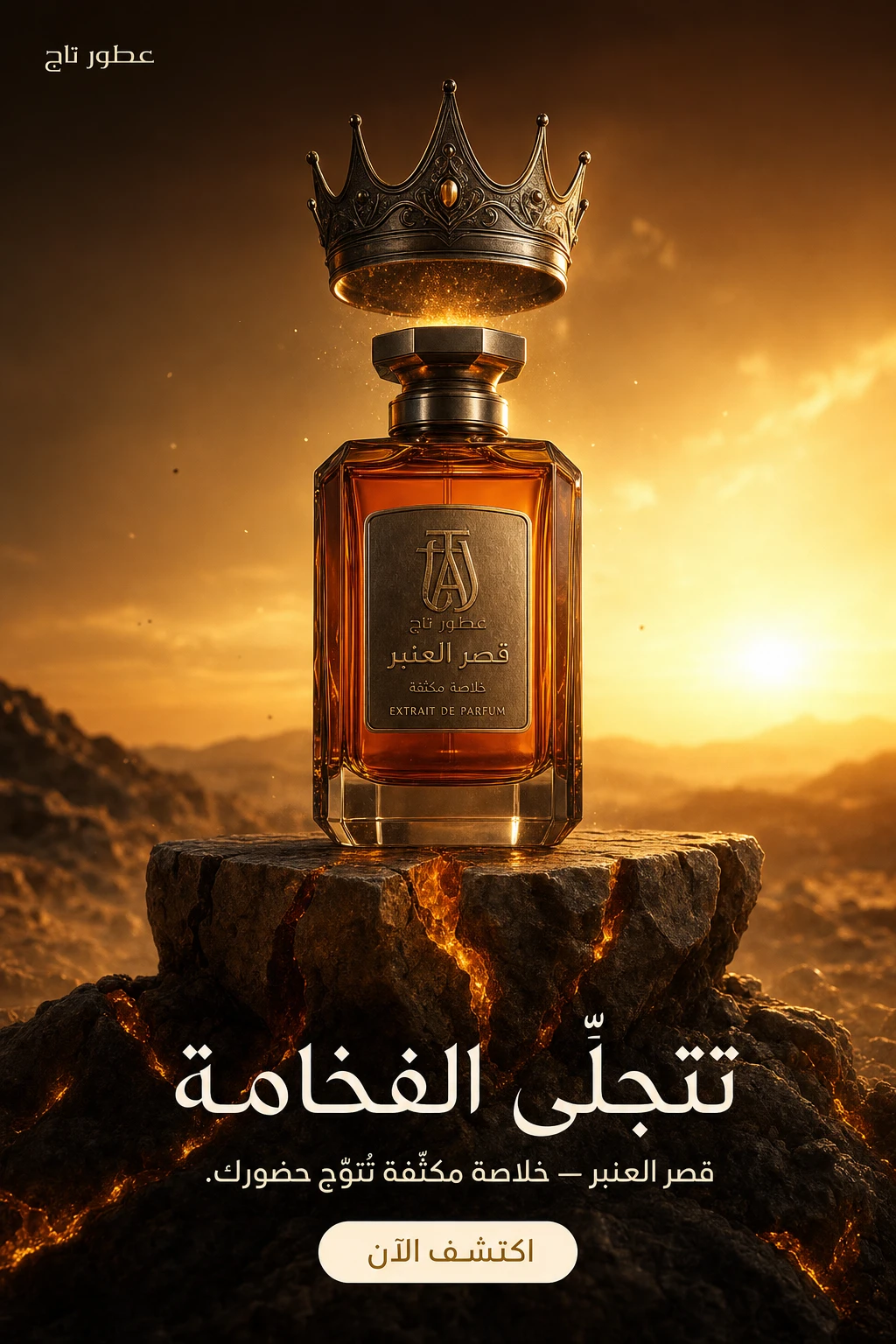
Embed 1: Close-up Sauce Reveal (Example from Memm Gallery)
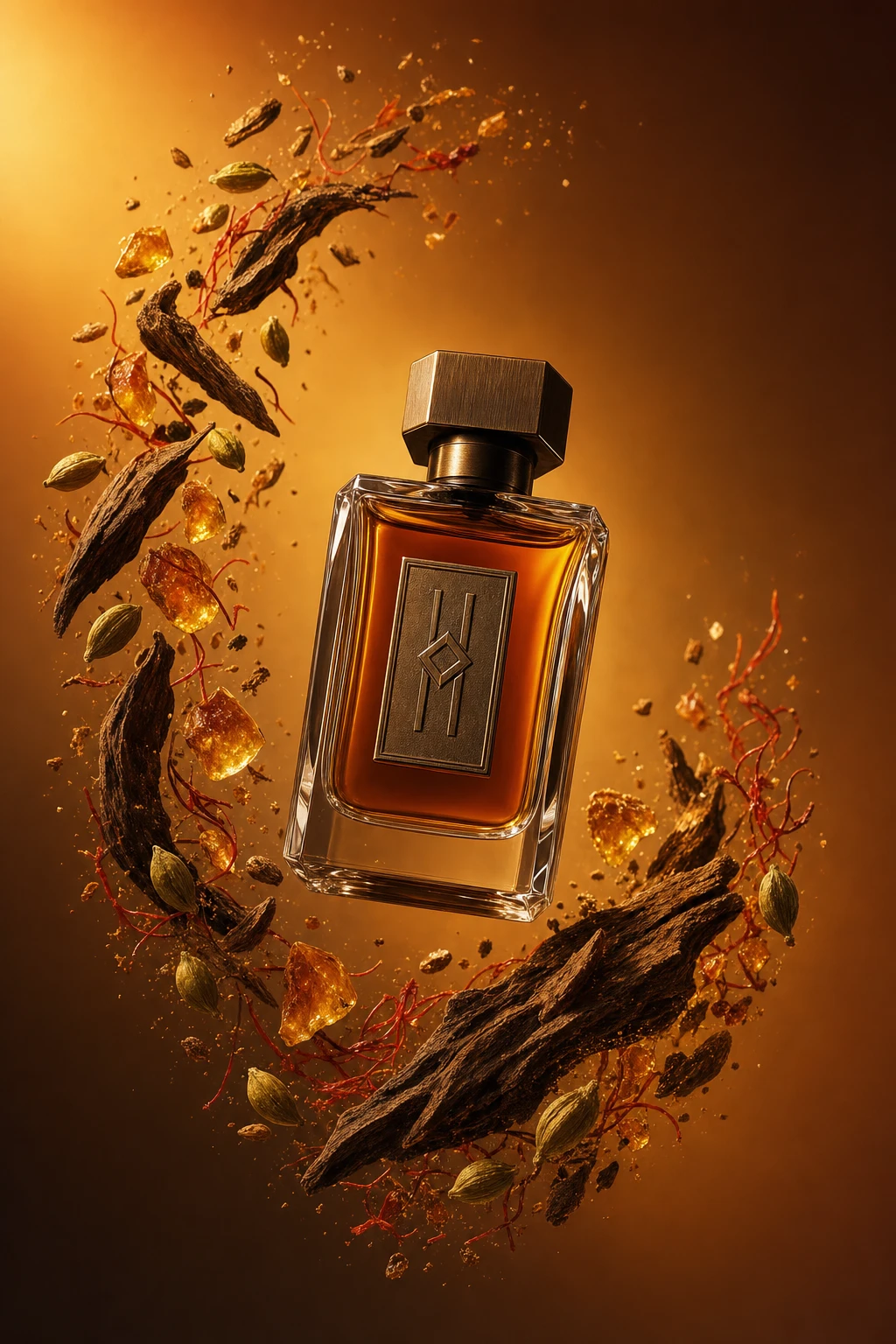
Embed 2: Lifestyle Bite (Hand + Burger, Social Setting)
Embed 3: Overhead Smash (Full Assembled Burger, Top-Down)
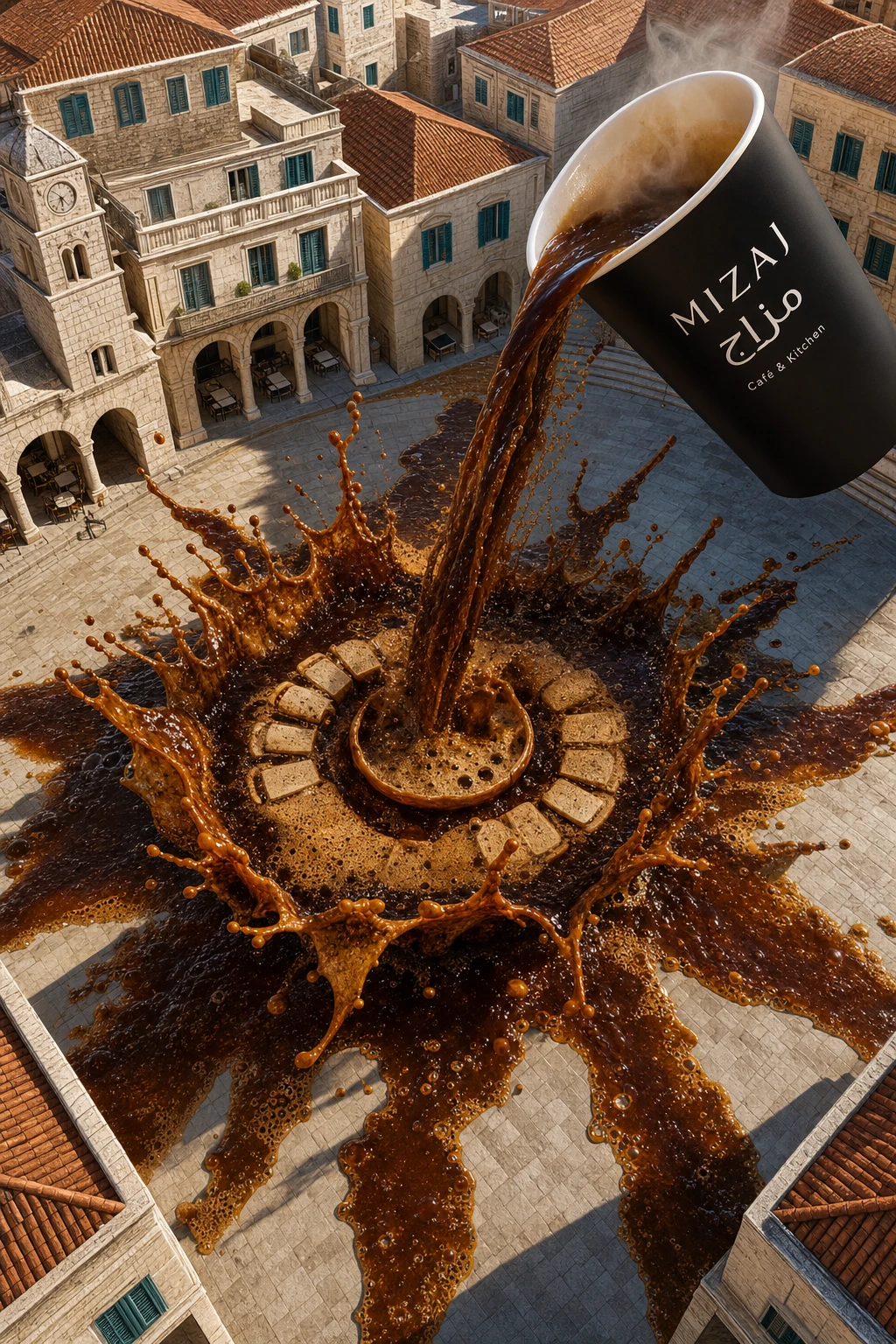
<!-- EMBED_DESIGN missing id=e7495a7f-9f4c-45ab-bcc9-f8db9bb01350 -->Embed 4: Bilingual Carousel (Arabic + English Text Treatment)
Avoid these three anti-patterns
Anti-pattern 1: The "Steakhouse Plating" Burger You shoot the burger on a oversized plate with negative space, dramatic lighting, and a sauce smear. This reads as "we're pretending to be fine-dining." GCC burger diners don't want pretense; they want abundance. Overcomplicate the plating and you signal "this isn't fast-casual anymore, it's expensive now." Lose the customer.
Anti-pattern 2: The Ingredient Explosion Some burger ads show the burger deconstructed — every component floating around the plate or suspended mid-air. This is Instagram-native and eye-catching, but for a burger it reads as wasteful and chaotic. You're selling food, not an art project. Keep the burger assembled in at least 2 of your 3 carousel slides.
Anti-pattern 3: The Unhappy Lighting Burgers are warm food. They're best photographed in warm light (golden hour, warm tungsten, or warm studio lighting). A burger shot in harsh midday sun or cold blue light looks unappetizing. If you're shooting on-location (not in a studio), shoot before 10 AM or after 4 PM. If you're using Memm to generate a burger ad and the lighting comes out cool or clinical, regenerate with "warm golden-hour lighting" or "studio tungsten warmth" in your brief.
What changes if you're a burger chain vs. a burger food truck vs. a ghost kitchen
Burger chain (sit-down location): Lead with lifestyle. Show other people. Show the restaurant interior. Establish that this is a social experience. Conversion goal: foot traffic.
Food truck (mobile, no fixed location): Lead with the product (overhead or close-up sauce). Lead with "find us here" (location pin, today's spot, QR code). Conversion goal: location awareness.
Ghost kitchen (delivery only, no physical location): Lead with appetite. Close-up sauce, ingredient detail, unboxing moment. Conversion goal: order-now link (Talabat, Zomato, Careem). Don't emphasize missing physical location; emphasize "ready in 25 minutes."
Takeaway — the operating principle
Burgers are appetite, velocity, and toppings visibility. Steakhouses are ceremony, restraint, and craft. When you shoot or design a burger ad in the GCC, think "fast-casual abundance" not "fine-dining craft." Smash beats gourmet every time — not because smash is better food, but because smash and gourmet speak different visual languages to different psychological states. Use the language your product deserves.
Next step
Open Memm and upload a photo of your best burger. Run a generation with "fast-casual burger ad, overhead smash or close-up sauce reveal, warm golden lighting, GCC Instagram aesthetic, fast-casual energy." Memm will route to Nano Banana Pro for detail fidelity. Download the variations and run a small test: post one variation as a carousel slide, one as a Reel. Track clicks and saves. The one that converts becomes your template for the next round.
Try this in Memm
Make a campaign like this in seconds.
Generate Arabic and bilingual ad visuals from your product photos — no design experience needed.
Open in MemmKeep reading
food-beverage
تصميم إعلان مشروب صيفي بالعربي: مرئيات تنقل البرودة
المشروب الصيفي في إعلان دافئ يبدو بلا روح. المشروب نفسه في إعلان بارد يجعل الناظر يقول: أحتاجه الآن.
5 min readfood-beverage
Energy Drink Brand Launch on TikTok MENA: A 90-Day Creative Plan
Energy drinks don't sell on product shots. They sell on youth, velocity, and the moment of choice. Here's the 90-day content strategy that moves TikTok viewers to 'buy my first can.'
8 min readfood-beverage
تصميم إعلان كافيه ومخبز عربي: من المنيو إلى لوحة العرض
الفرق بين إعلان مقهى يبيع فعلاً وإعلان مقهى «شكليّ» يكمن في ثلاثة قرارات تصميمية، تُتّخذ كلّها على نحو خاطئ.
7 min read