Luxury Car Dealer Instagram Ads in Dubai: 6 Frames That Convert
Luxury car ads don't sell on speed or specs. They sell on lifestyle, scarcity, and the moment of decision. Here are the six compositions that move buyers from 'admire' to 'visit the showroom.'
From the Memm Editorial Team
Original guides on Arabic ad design, MENA campaign strategy, and bilingual creative direction.
Luxury Car Dealer Instagram Ads in Dubai: 6 Frames That Convert
A luxury car dealership in Dubai (BMW, Mercedes, Porsche tier) watches their Instagram Insights. Three ads this month — all showing beautiful luxury cars, all with professional photography, all with the dealership name and location clearly stated. Same budget, same targeting, same daypart. Ad 1 got 890 clicks. Ad 2 got 290 clicks. Ad 3 got 3,200 clicks. Same product category. Same sales price. Completely different visual composition.
The difference wasn't the car. It was the frame. Ad 3 showed the car in context — a man opening the driver door, the interior visible, the moment of ownership. Ads 1 and 2 showed the car alone, which is technically more photogenic but psychologically less converting. A luxury car buyer in Dubai doesn't want to admire a beautiful car; she wants to imagine herself in it. The six-frame carousel that moves from hero shot → interior detail → driver's perspective → owner's moment → status signal → test-drive CTA is the conversion sequence.
This article breaks down the six compositions that move luxury car shoppers from "beautiful photograph" to "let me visit the showroom."
Frame 1: The Hero Shot (The Car Alone, But Positioned for Desire, Not Documentation)
What it is: The car, full shot, centered or off-center (rule of thirds), at a glamorous location (not a neutral studio). The car is the undisputed star.
Why it matters: A luxury car's hero shot is the entry point. It must signal rarity, craftsmanship, and belonging to an exclusive world. This is the frame that stops the scroll.
How to compose:
- Location: iconic Dubai setting (Marina, Downtown, desert dune) or a minimalist white studio (not a parking lot)
- Angle: 3/4 front, showing the front grille, the hood line, and the side profile
- Lighting: golden hour or dramatic studio lighting (not harsh midday)
- The car should appear at ease in the environment (not squeezed or cramped)
- Include the dealership name subtly (lower corner, not across the hood)
Text on this frame: The car model and a single value prop ("Precision engineering" / "Pure luxury" / "Only 3 available in Dubai")
Frame 2: The Interior Detail (The Dashboard, The Steering Wheel, The Craftsmanship)
What it is: A close-up of the car's interior — usually the dashboard and steering wheel, or the leather seats with a hand resting on them.
Why it matters: A luxury car buyer wants to know: "What does it feel like to be in this car?" The interior detail answers that question. It signals craftsmanship, material quality, and the sensory experience of owning the car.
How to compose:
- Focus on the steering wheel (symbol of control and identity) or the dashboard controls (symbol of sophistication)
- Show hands on the wheel or touching the leather seats (this is the ownership moment)
- Lighting should be warm and intimate (golden hour light through the window, or soft studio light)
- Include details: the stitching on the leather, the precision of the controls, the screen display if it's cutting-edge
- The background should be softly blurred (the road, the city skyline)
Text on this frame: A sensory descriptor ("Hand-stitched leather" / "Precision at your fingertips" / "The driver's sanctuary")
Frame 3: The Lifestyle Shot (The Car in Context — A Drive Through Dubai)
What it is: The car in motion or parked in an enviable location, with a person visible (driver or passenger). The car is part of a life, not just a vehicle.
Why it matters: Luxury car buyers are buying status and identity. They need to see themselves in the car. A lifestyle shot that shows the car cruising through Burj Park or parked at a beach sunset says: "This is the car for people who live this life."
How to compose:
- Location: iconic Dubai or Gulf scene (marina, desert, beachfront, downtown)
- The car should be framed so the destination/location is visible (not just the car)
- A person should be visible in/around the car (driver with hands on wheel, passenger smiling, or a couple standing near the car)
- The person should look confident, at ease (this is their world)
- Time of day: golden hour (before sunset) is almost always superior to midday
Text on this frame: Lifestyle language ("The road to elegance" / "Where ambition and luxury meet" / "Your next adventure starts here")
Frame 4: The Detail Reveal (The Tech, The Badge, The Signature Feature)
What it is: A macro or medium shot of the car's signature feature — the badge, the grille design, the headlight technology, the wheel design, or the interior digital display.
Why it matters: Luxury car buyers are invested in the details. They've researched specs, they know the badge, they appreciate craftsmanship. A detail reveal that shows the precision of the design (the angle of the headlights, the stitching pattern on the steering wheel, the grille geometry) signals that you respect their intelligence and their appreciation for craft.
How to compose:
- Choose one detail per ad (not multiple details competing)
- Macro lighting that shows depth and texture (the badge isn't flat, it has contours; the grille has shadow and dimension)
- The background should be blurred (the detail is the star)
- Include a hand or measurement for scale (luxury objects look more impressive when you can see their size)
Text on this frame: Technical or poetic language specific to the detail ("German precision" / "The signature grille" / "Every curve, engineered")
Frame 5: The Status Signal (The Car Parked Alongside Other Luxury Vehicles, or In Exclusive Company)
What it is: The car positioned to signal exclusivity or scarcity. This could be:
- A lineup of the dealership's most exclusive models
- The car parked in front of a luxury hotel, yacht, or exclusive location
- The car alone, but with text indicating rarity ("Only 12 in the UAE")
Why it matters: Luxury is about scarcity. Showing that this car is rare, or belongs in a rarefied circle, increases desire. This frame triggers FOMO (fear of missing out) and urgency.
How to compose:
- Location: exclusive venue (hotel, marina, airport terminal, luxury mall)
- The car should dominate the frame, but the exclusive context should be recognizable
- Lighting: clean, well-lit (no ambiguity)
- The car should look like it belongs in this environment (not like a tourist)
- Include the dealership brand if there are multiple cars (so it's clear they're all premium inventory)
Text on this frame: Scarcity or prestige language ("Exclusively in Dubai" / "One of six" / "The collector's choice" / "Request your private viewing")
Frame 6: The Call-to-Action (The Test-Drive Moment, or the Showroom Invitation)
What it is: An invitation to action — usually a test-drive offer, showroom location, or exclusive viewing appointment. This frame closes the carousel and directs the viewer to the next step.
How to compose:
- Visual: the car parked in the showroom (if applicable), or a key in the ignition, or a person handing over keys
- Include dealership logo, location, phone number, and/or website clearly
- Text should be action-oriented ("Book your test drive" / "Visit us today" / "Secure your appointment")
- Lighting: professional, clean, inviting (the showroom should look like a space where buyers want to spend time)
Text on this frame (the CTA):
- Primary: "Book a test drive →" or "Call now: +971 4 XXX XXXX" or "Visit our showroom"
- Secondary: dealership website or WhatsApp link
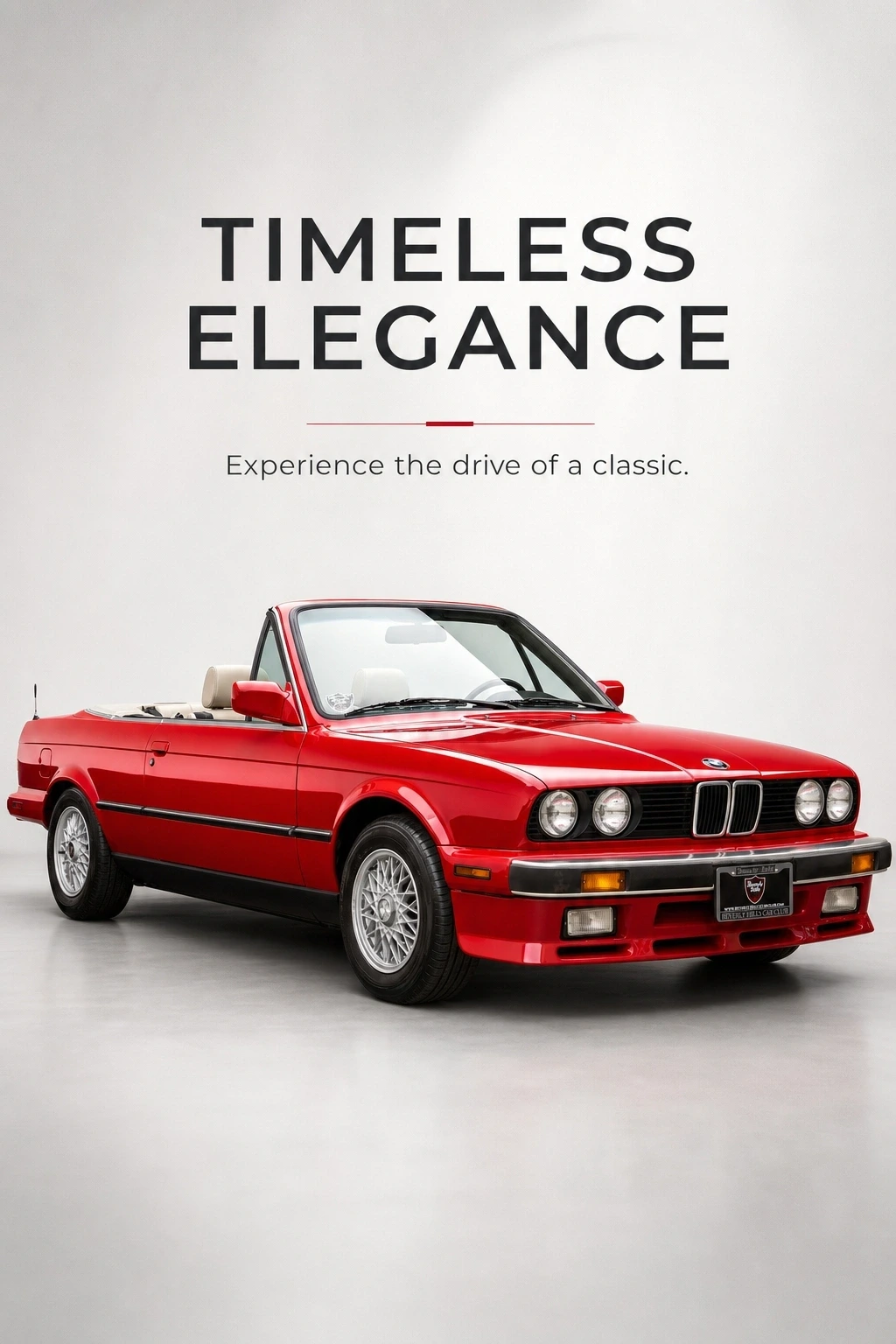
Embed 1: Hero Shot (Full Car, Golden Hour Location)
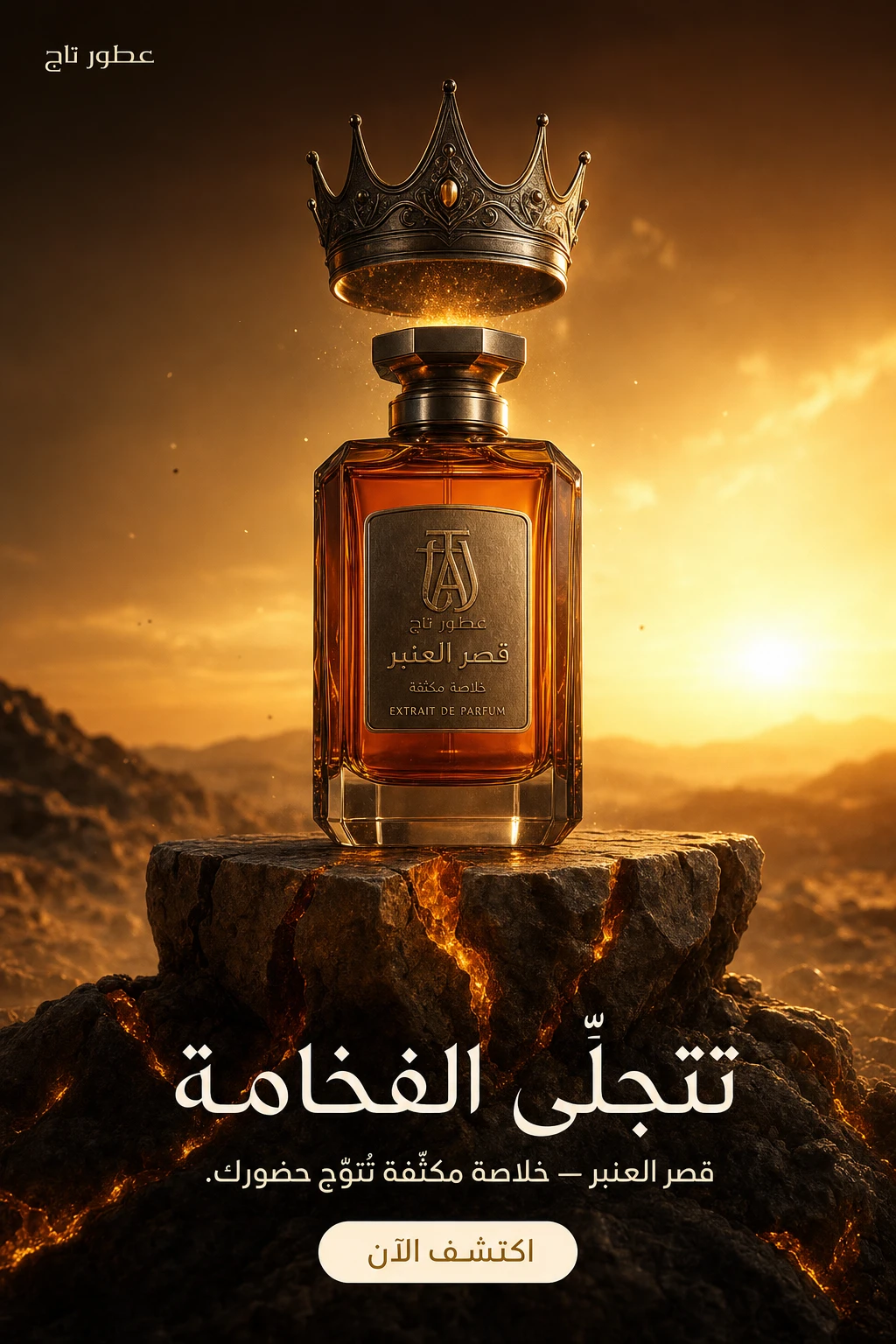
Embed 2: Interior Detail (Steering Wheel + Hands)
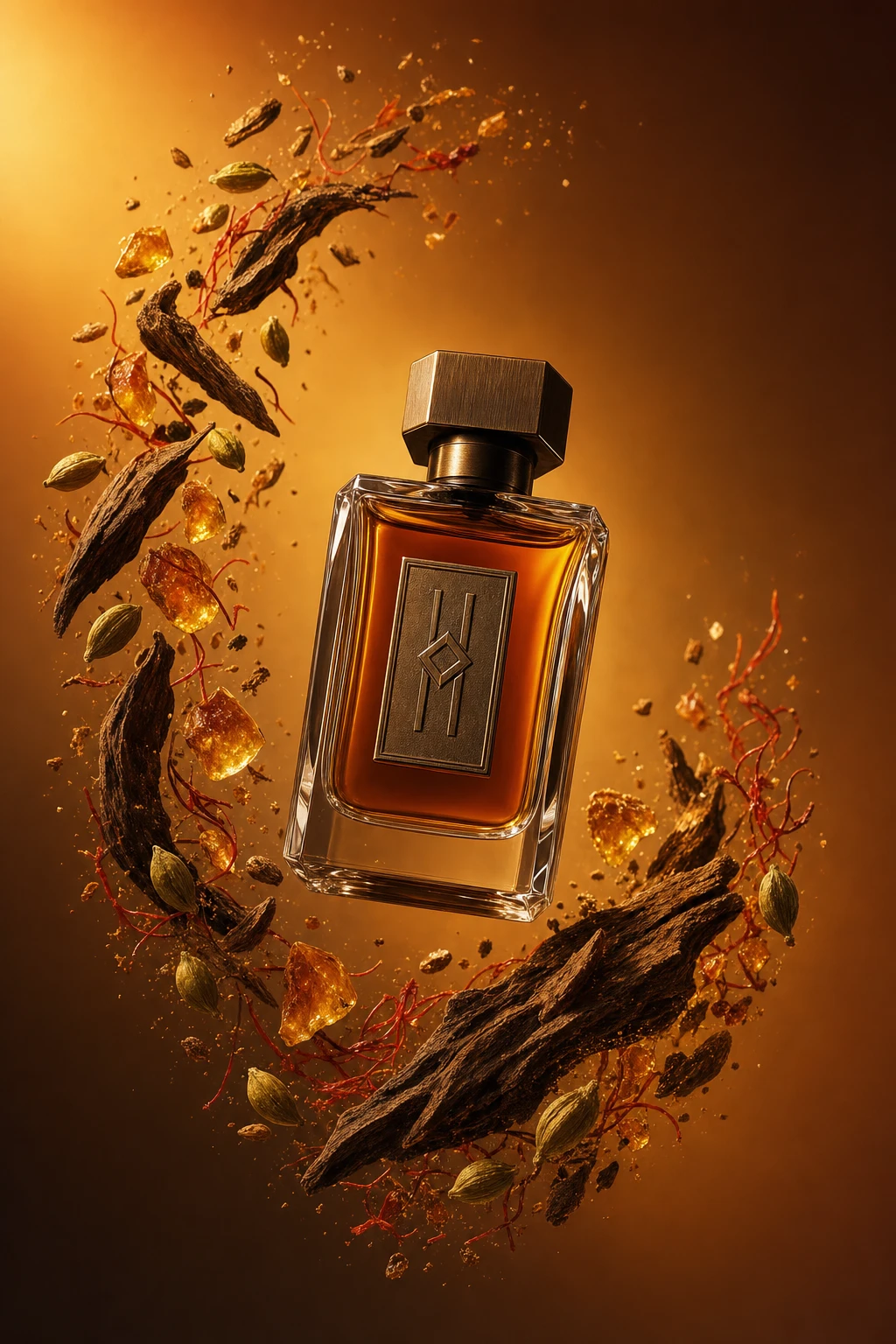
Embed 3: Lifestyle Shot (Car in Motion + Context)
<!-- EMBED_DESIGN missing id=e7495a7f-9f4c-45ab-bcc9-f8db9bb01350 -->The Bilingual Luxury Ad — Text Placement
For Dubai/GCC dealerships serving Arabic and English speakers:
- Keep text luxury-focused and bilingual
- Arabic on the left (RTL), English on the right
- Never make the car feel cheap or urgent with text (avoid "HUGE SALE" or "BEST PRICE")
- Frame as exclusive and invitation-based ("Private viewing available" / "Schedule your appointment")
Avoid These Anti-Patterns
Anti-pattern 1: The Cluttered Showroom Car surrounded by other vehicles, promotional signs, and "SALE!" banners. This reads as commodity, not luxury.
Anti-pattern 2: The Oversaturated Color Heavy filters or unrealistic color grading. Luxury cars are elegant — let the real colors speak.
Anti-pattern 3: Text Overload Specs, prices, financing offers crammed into the carousel. Luxury buyers don't buy on features; they buy on aspiration. Keep text poetic and minimal.
Anti-pattern 4: The Empty Seat Showing the car without any human presence. Humans make the car real. At least one frame should show someone in/around the car.
Anti-pattern 5: The Awkward Location A luxury car photographed in a parking lot or a bland neutral studio. Luxury cars belong in enviable locations.
Next Step
If you run a luxury car dealership in Dubai, work with a photographer to capture six frames following this sequence. Upload to Memm and specify: "Luxury car carousel ad, six-frame sequence from hero → interior → lifestyle → detail → status → CTA, Dubai luxury aesthetic, golden hour lighting preferred."
Memm will adapt these compositions into your specific car photos. Test the carousel for 7 days; track clicks to "book test drive" or "call now." The frames that convert highest become your rotation template for future inventory launches.
Try this in Memm
Make a campaign like this in seconds.
Generate Arabic and bilingual ad visuals from your product photos — no design experience needed.
Open in Memm