Bilingual vs single-language ads in MENA: when each one wins
A working playbook for a small Saudi, UAE, Egyptian, or Maghreb brand deciding whether to ship Arabic-only, English-only, or both — and why most 'bilingual' ads in MENA are actually broken-Arabic ads with English on top.
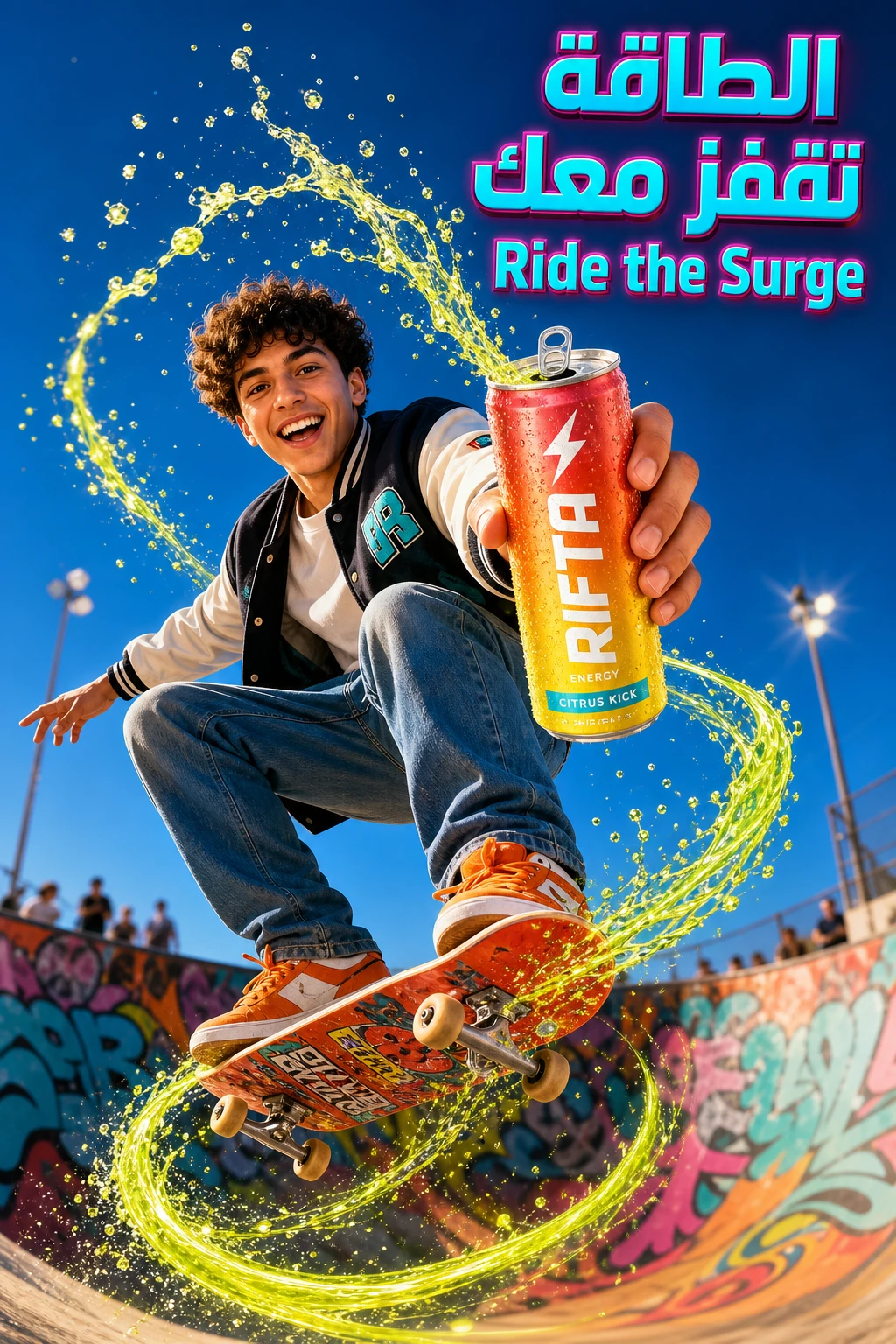
From the Memm Editorial Team
Original guides on Arabic ad design, MENA campaign strategy, and bilingual creative direction.
Bilingual vs single-language ads in MENA: when each one wins
A working playbook for a small Saudi, UAE, Egyptian, or Maghreb brand deciding whether to ship Arabic-only, English-only, or both — and why most "bilingual" ads in MENA are actually broken-Arabic ads with English on top.
You're stuck between two languages, and you're about to do both badly
You run a small beauty brand on Salla. You're about to brief a 9:16 Reel for next week's launch, and you stop on the same question every MENA brand owner stops on: Arabic, English, or both? Your friend in Riyadh says Arabic only — "expats will get it from the visual." Your sister in Dubai says bilingual — "you'll miss half the city without English." Your designer says she'll just put both lines on the artwork and you can decide later.
That third option is the one to refuse. "Both lines on the artwork" is how 80% of MENA's mid-tier brands end up shipping ads that read as broken Arabic with an English caption — Google-translated headlines, kerning off, line-heights wrong, dialect register foreign, and an English line that competes rather than supports. Bilingual is not a safety choice. It is a deliberate hierarchy choice — pick the dominant language, then decide what the supporting language is allowed to do. Get it right and you double your reach across a region where 78% of consumers prefer to interact with brands in Arabic (CSA Research Can't Read Won't Buy, 2020). Get it wrong and you halve the conversion rate of either single-language version.
How MENA actually splits across languages in 2026
Three numbers shape every Arabic-vs-English decision your brand will make this year.
First, scale. Arabic is the fifth most-spoken language globally, with over 400 million speakers (Britannica, Arabic language), and 78% of consumers globally are more likely to buy a product when information is available in their native language (CSA Research, Can't Read Won't Buy 2020). In MENA specifically that bias hardens: Arabic-first creative outperforms English-only by a wide margin in Saudi-only campaigns even though the audience reads English fluently.
Second, split. The UAE has a foreign-born population of roughly 88% — 6.5 million expats out of a 7.4 million total — while only 11.8% of UAE residents are Emirati citizens (Global Media Insight UAE Population Statistics, January 2026). Saudi Arabia's resident population is roughly 41% foreign-born (Statista Saudi Arabia Population by Nationality, 2025). Kuwait runs at 64% foreign-born (Wikipedia, Kuwait demographics). Egypt and the Maghreb are nearly homogeneous Arabic-speaking. A bilingual ad on Sheikh Zayed Road and a bilingual ad in Heliopolis Cairo are not the same product — one is rational, the other is signal noise.
Third, register. Modern Standard Arabic (MSA / Fus'ha) is formal, news-broadcast, slightly distant — fine for banks, wrong for a salon. Khaleeji Arabic reads warm to Gulf audiences but slightly foreign in Cairo. Egyptian Arabic carries cross-regional mass-media reach via decades of MBC-distributed musalsalat but sounds wrong on a Riyadh luxury brand. Choosing register is a strategic decision, not a copywriter's preference (Memac Ogilvy MENA strategy commentary, ALTA Language Services translation fails archive).
You don't need to "be safe." You need to be specific.
The 3 cases where bilingual wins
1. Pan-MENA SaaS, fintech, or modern-services brand
When your audience self-segments — Saudis read your Arabic line, Lebanese-Egyptian-Jordanian professionals in Dubai read your English line — bilingual is structurally correct. Careem operates a fundamentally bilingual brand identity precisely because its rider base in Dubai is 88% expat and its rider base in Riyadh is majority Saudi — same product, two reading audiences in the same metro area. Careem's 50 million users across 70+ MENA cities ride a single bilingual brand world (Careem corporate / Wikipedia). Anghami carries roughly 70 million users across 16 MENA markets on the same bilingual logic (Anghami corporate via Wikipedia).
For an SMB owner: this is the case where you genuinely have two audiences in the same feed. A productivity-app founder selling to UAE professionals, a payments tool sold to Kuwaiti and Bahraini SMBs, a marketplace app whose buyers split Khaleeji-Arabic and English-fluent expat — bilingual signals modern and cosmopolitan, and the audience self-sorts on which line they read. Pre-AI, this required two parallel design tracks at an agency, often two separate creative teams; today you can ship one bilingual key art in an afternoon with Memm (ميم), pick the dominant language, and the agent builds the supporting line at the correct weight.
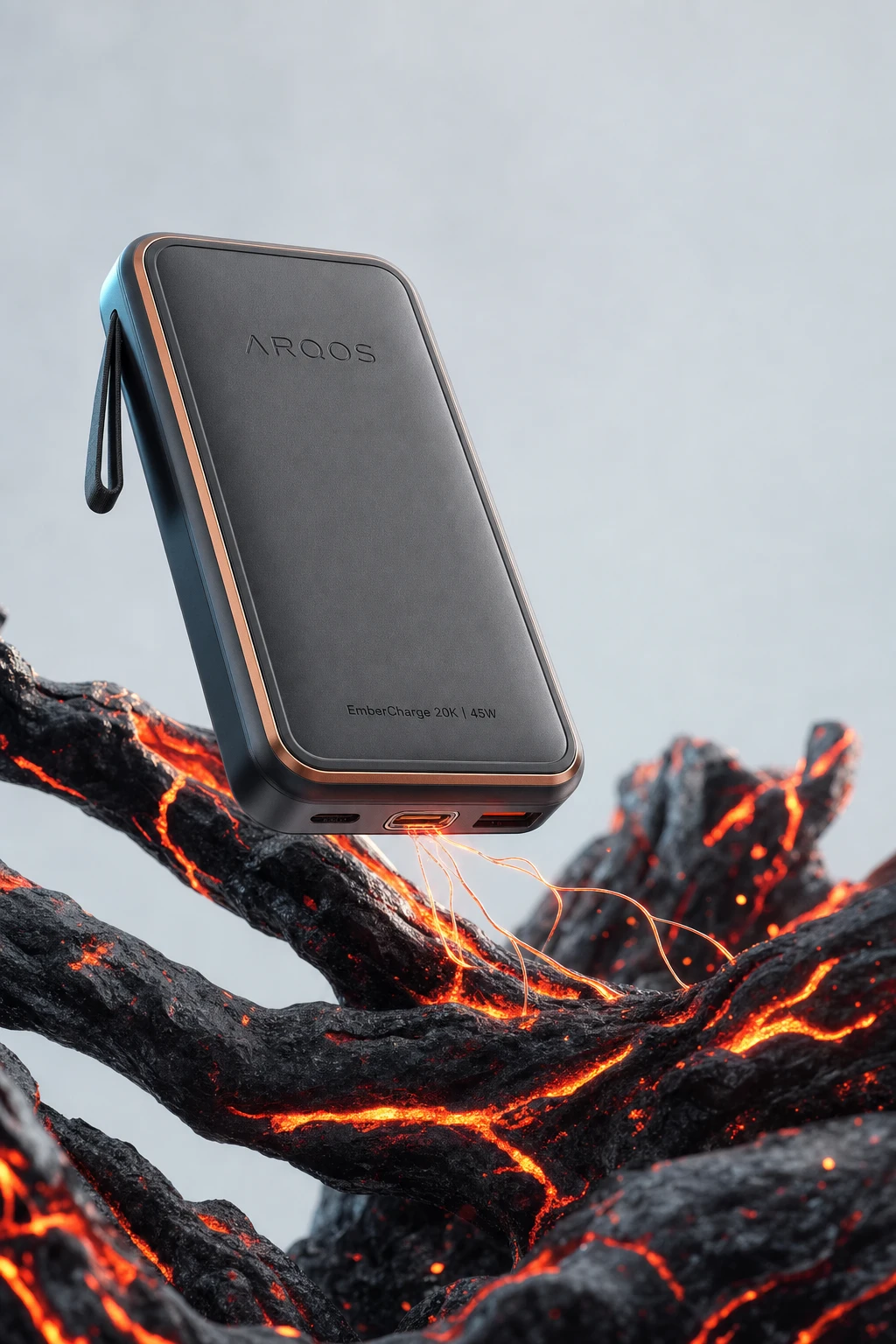
2. Premium beauty, fashion, or hospitality where English signals international-luxury and Arabic signals cultural-respect
The hotel category in the GCC has had this figured out for two decades. Four Seasons, Mandarin Oriental, Bvlgari Hotel Dubai all run bilingual collateral where the English carries international-luxury cue and the Arabic carries we-respect-where-we-are cue. Stripping either side reads as either tone-deaf (English-only — "you don't care about your host") or provincial (Arabic-only — "you're not actually international"). Same logic applies to premium F&B and beauty in Riyadh and Dubai where the brand wants to occupy the "we're global and we're rooted here" mental shelf.
For a small jewelry brand or a single high-end restaurant aiming at the premium GCC consumer: bilingual is the right answer because each language is doing different work. English isn't decorative — it's positioning. Arabic isn't a translation — it's credentialing. The Arabic line should not say the same thing as the English line; it should say the culturally adjacent thing. STC's transformation work, which moved the brand from "telco" to "digital enabler of Vision 2030," ran a bilingual register precisely because its Saudi audience needed the cultural-anchor signal and its category needed the global-modernity signal simultaneously (Latterly, Saudi Telecom Company Marketing Strategy; Campaign Middle East, Dubai Lynx 2020 Advertiser of the Year). STC ran that thinking across the equivalent of a $100M+ annual media weight. The same insight scales: a single hospitality brand in Jeddah with a $1,200/month ad budget can apply it by giving its Arabic headline the larger weight and using a smaller English support line that names the positioning, not the offer.
3. Cross-Gulf retail with high expat density in the target market
If your campaign runs across Saudi-UAE-Kuwait-Bahrain — where expats account for 41% of Saudi, 88% of UAE, 64% of Kuwait, 55% of Bahrain residents (Global Media Insight, Statista, Wikipedia demographics 2025–2026) — single-language ads systematically leak audience. The cross-Gulf retail brief is the bilingual brief: a Sephora-style promotion, a regional electronics retailer, a perfume brand selling through both Centrepoint and Sharaf DG. For an SMB seller running a regional Salla + Noon presence: if more than 35-40% of your historical orders ship to expat addresses (Abu Dhabi, JBR, Marina, Khobar compounds, Salmiya), you need bilingual or you're paying full media cost to reach half your buyers.
The 3 cases where single-language wins
1. Saudi-only premium — Arabic-only outperforms
Almarai is the cleanest reference. Almarai's 33% Saudi dairy market share (HBS Case Study) was not built on bilingual creative. The brand runs predominantly Arabic-only work for its core Saudi consumer segment because the Saudi-only premium ad with an English overlay reads as expat-targeted and hurts perceived authenticity. The same applies to most KSA-luxury propositions — Saudi luxury perfume houses, premium Saudi-only F&B, KSA-only hospitality — where the addition of an English line collapses the "made for us, by us" cue that drives premium pricing.
For an SMB selling primarily into Saudi: if your customer profile is 80%+ Saudi national, ship Arabic-only and don't apologise for it. The English line is not "safe" — it's a tax on perceived authenticity. The marketing-craft equivalent of a Saudi luxury brand putting an English headline on its Riyadh OOH is a French winery putting an English headline on its Champagne case — technically inclusive, strategically self-defeating.
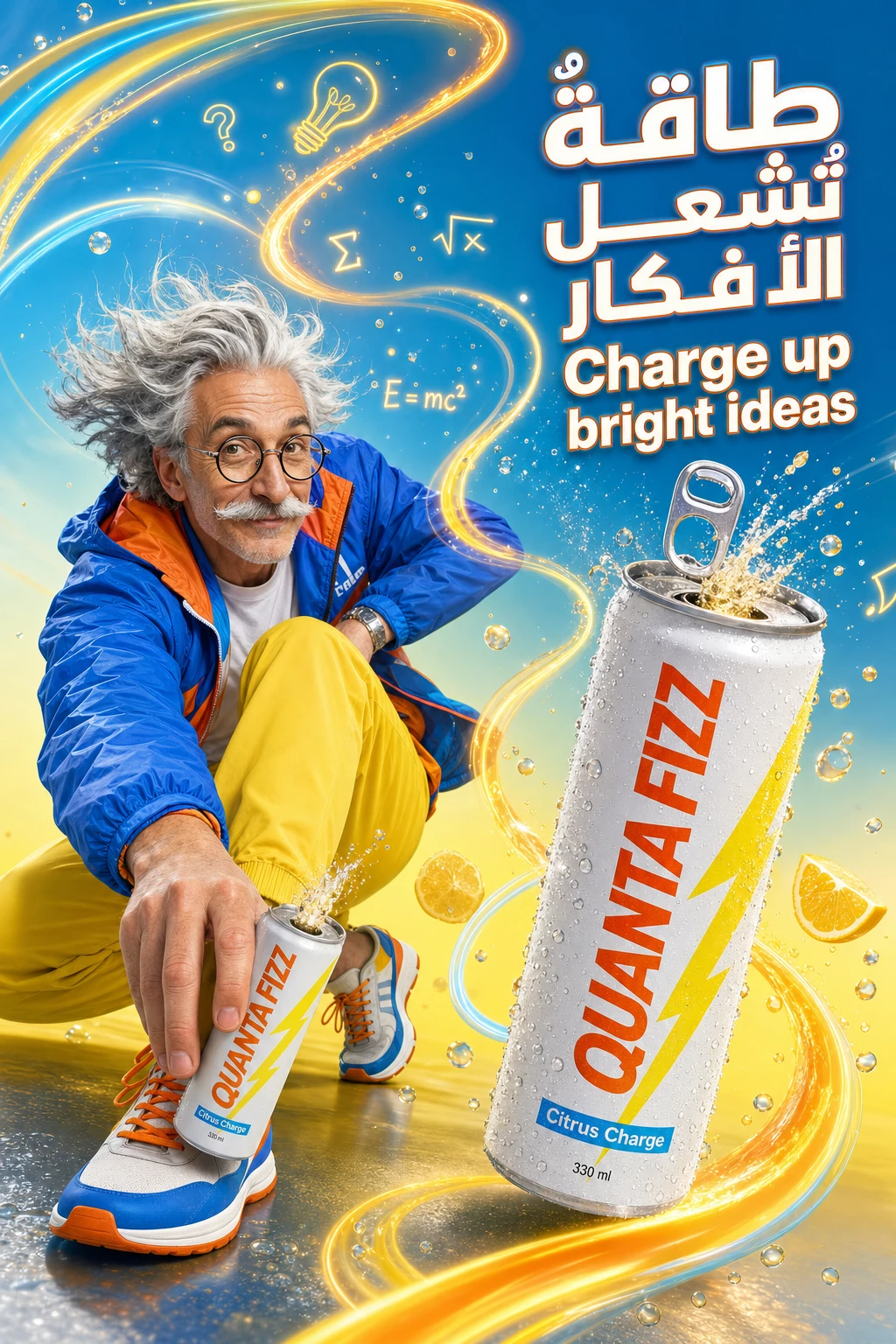
2. Maghreb — bilingual confuses the register
Morocco, Algeria, and Tunisia run on a different linguistic logic. French operates as the second language of business across all three, Berber/Tamazight is co-official in Morocco and Algeria, and the local Arabic dialects (Darija in Morocco, Tunisian Arabic, Algerian Arabic) carry mass-market familiarity. Adding English to a Maghrebi ad doesn't broaden the audience — it confuses the register. A Casablanca or Tunis viewer reads "we don't actually know which Maghreb we're targeting" rather than "this is a cosmopolitan brand."
The senior MENA strategist's rule for the Maghreb: choose French + Darija (Morocco), French dominance with Tunisian Arabic support (Tunisia), or French + Algerian Arabic (Algeria). English is the wrong second language unless you are targeting a narrow expat-NGO-tech segment — and even then, it's marginal.
3. Egypt — Egyptian dialect wins, bilingual feels NGO-shaped
Egypt's 110+ million population is functionally monolingual at mass-market scale. Egyptian Arabic in dialect prose carries warmth and recognition; MSA reads as broadcast-news; English on top reads as an aid-organisation or NGO communication. Egyptian advertising tradition — humour-forward, family-anchored, dialogue-driven, cinema-style (MENA Effie winners archive) — punches harder in dialect than in any bilingual register.
For an SMB targeting Cairo, Alexandria, or the Egyptian diaspora across the GCC via MBC-style mass media: Egyptian Arabic, single-language, every time. A salon owner in Heliopolis running bilingual Reels is not "being inclusive" — she's signalling that the brand isn't sure who it's for.
The 70/30 hierarchy rule for bilingual ads
When you commit to bilingual, you commit to a hierarchy. Equal weighting is a design mistake that flattens the headline.
The rule: 70% visual weight to the primary language, 30% to the support. Type size, colour saturation, position-in-grid, and stroke weight all add up to the 70/30 split. The eye should land on the primary headline first in under a second, then settle on the support line as additional context. If both lines compete, neither wins.
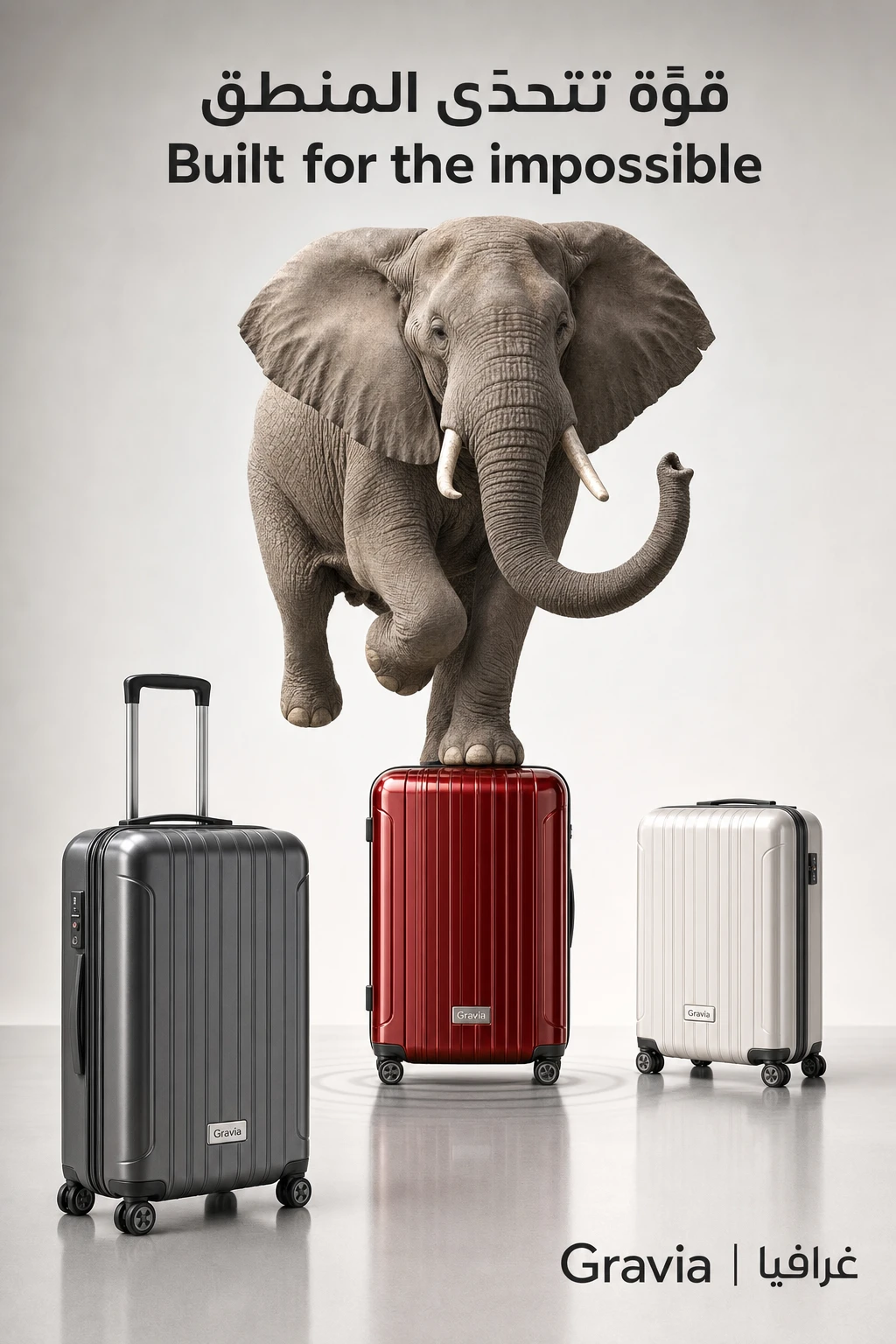
The placement question that follows: which language gets the 70%? For MENA-targeting campaigns, the Arabic anchor takes the larger weight; English is decorative, anchored, smaller. Reverse it (English dominant, Arabic smaller) only if you are an international brand entering MENA and explicitly want the "global-now-here" cue — but understand that this read is foreign by design, and your Saudi consumer registers it as such. A senior MENA art director will fight to keep the Arabic dominant on any work aimed at Khaleeji audiences. A junior art director will let the English creep up in size because it "looks cleaner" in their CMD+Z muscle memory — that drift is what produces the visually flattened ads that fill the long tail of every Saudi mall poster wall.
Typography pairing — the failure mode most ads miss
Naveid Arabic, the typeface this Playbook is set in, is a modern-display Arabic family that pairs cleanly with a small set of Latin faces and disastrously with others. The pairing rule senior MENA designers carry:
- Naveid Arabic + Bodoni — fashion, luxury, premium beauty. Both faces are high-contrast and editorial.
- Naveid Arabic + Inter (or SF Pro) — tech, SaaS, fintech. Modern, clean, neutral.
- Naveid Arabic + Playfair Display — beauty, hospitality, premium F&B. Decorative-meets-functional.
- Naveid Arabic + Avenir or Montserrat — geometric SaaS, services, modern retail.
The failure modes are diagnostic:
- Naveid Arabic + Times New Roman — era mismatch. The Latin face reads 1995-academic; the Arabic reads 2024-display. The eye registers the conflict before it registers the headline.
- Cairo (a common default Arabic web face) + Garamond — weight mismatch. Cairo is geometric; Garamond is humanist serif. Two different design vocabularies fighting for the same headline.
- Any Arabic display face + a default system font on the English line — under-investment signal. Reads as "we cared about the Arabic; we didn't care about the English." Even more lethal in reverse.
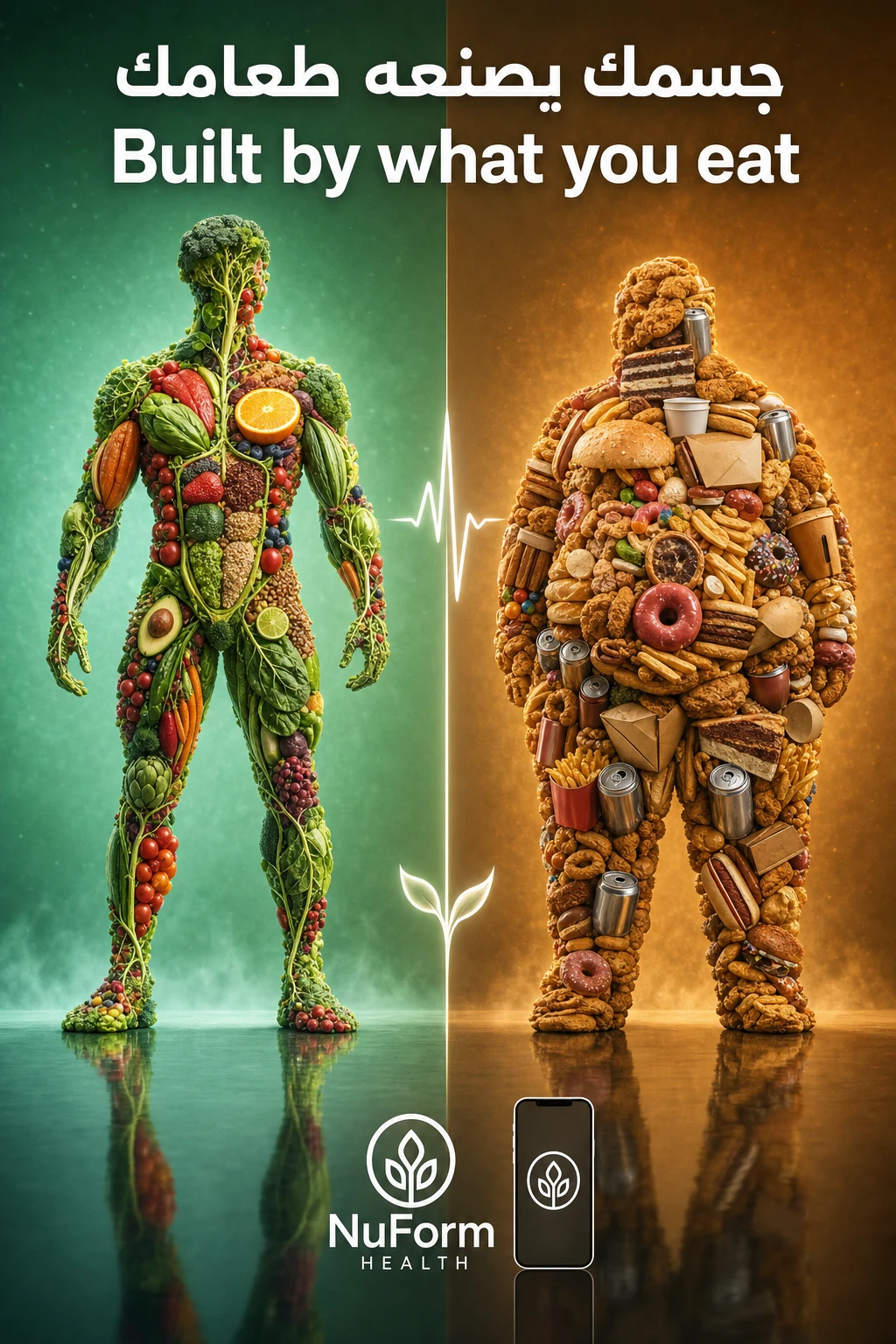
The single most common Arabic-typography failure mode in bilingual ads is one this Playbook flags in every relevant article: when an English-led agency does bilingual, the Arabic line is auto-translated through a tool, the kerning is off, the line-height is wrong (Latin line-heights are tighter than Arabic line-heights and the designer leaves the default), and the headline ends up 2× too long in physical width because Arabic words are more letter-dense. The result is what most "bilingual" ads in MENA actually are: broken-Arabic ads with English on top. Pre-AI, fixing this required a senior Arabic typographer on the studio floor — a $1,500-a-day hire most SMB brands could not justify. Today the typography pairing is automatic in Memm; the agent ships the Arabic at the correct line-height, the kerning calibrated for the chosen face, and the supporting Latin line set at the matching weight.
The break-even audience-split math
The cost ledger for bilingual vs single-language:
- Bilingual ads cost roughly 20–30% more in production time — two-language copy QA, two-language typography QA, two-language transcreation (not translation) work. For an SMB owner using Memm this is hours of agent-driven iteration, not a $3,000 line item; pre-AI it was the difference between a $5,000 production budget and a $7,000 one (Snappr Enterprise commercial production benchmarks; standard MENA agency rate-card spread).
- Single-language ads earn 15–20% higher engagement within their target segment but lose the cross-segment audience entirely — measurable in the Meta Reach breakdown by demographic.
- The break-even: if your audience is more than 70% one language, single-language wins on engagement-per-dollar. If your audience is 40–60 or 60–40 split between Arabic-first and English-first readers, bilingual wins because the cross-segment loss exceeds the engagement penalty.
The audit a senior media planner runs before signing off on creative language: pull your last 90 days of Meta + Snap audience-demographic breakdowns. If the language-preference proxy (typically resolved by phone OS language, browser language, and country) skews >70% to one bucket, ship single. If it splits more evenly, ship bilingual with the 70/30 hierarchy.
Real campaign references
Anghami's bilingual marketing identity is the closest MENA-native reference for a brand that operates bilingually as a design discipline, not as a hedge. Across 16 MENA markets and roughly 70 million users (Anghami corporate Wikipedia), Anghami's product UI, marketing assets, and campaign creative consistently run Arabic-dominant with English support, never the reverse, because its mental shelf is "the Arabic music streaming service" — English support clarifies for expat listeners; English dominance would dilute the positioning.
Almarai's Saudi-only Arabic-first work is the counter-example. Almarai's roughly 33% Saudi dairy share (HBS Case Study) is built on packaging, retail, and TVC creative that runs Arabic-first with no apologetic English overlay. The brand trusts its Saudi consumer to be the entire audience.
Careem's bilingual-by-default identity sits between the two. As a tech-services brand operating across Saudi, UAE, Egypt, Pakistan, Jordan, and Lebanon (Careem Wikipedia), Careem ships nearly all consumer-facing creative bilingually because its audience structurally is two audiences in the same product — its Riyadh rider is primarily Saudi, its Dubai rider is primarily expat, and the brand serves both with one consistent visual world.
What this looks like for your brand this week
The decision tree, compressed:
- Pull your last 90 days of orders or audience-demographic data. What's the language-preference split?
- If >70% one language: ship single, lean into that register fully (Khaleeji for Gulf, Egyptian for Egypt, Darija + French for Morocco), and don't apologise.
- If 40–60 / 60–40: ship bilingual with the 70/30 hierarchy. Arabic dominant for MENA-targeting work, English smaller and supporting. Transcreate — don't translate.
- If you're in Egypt, Morocco, Algeria, Tunisia, or running a Saudi-only premium brand: default to single-language regardless of split. Bilingual hurts more than it helps in these registers.
- Test typography pairing before committing — Naveid + Inter for tech, Naveid + Bodoni for fashion, Naveid + Playfair for beauty.
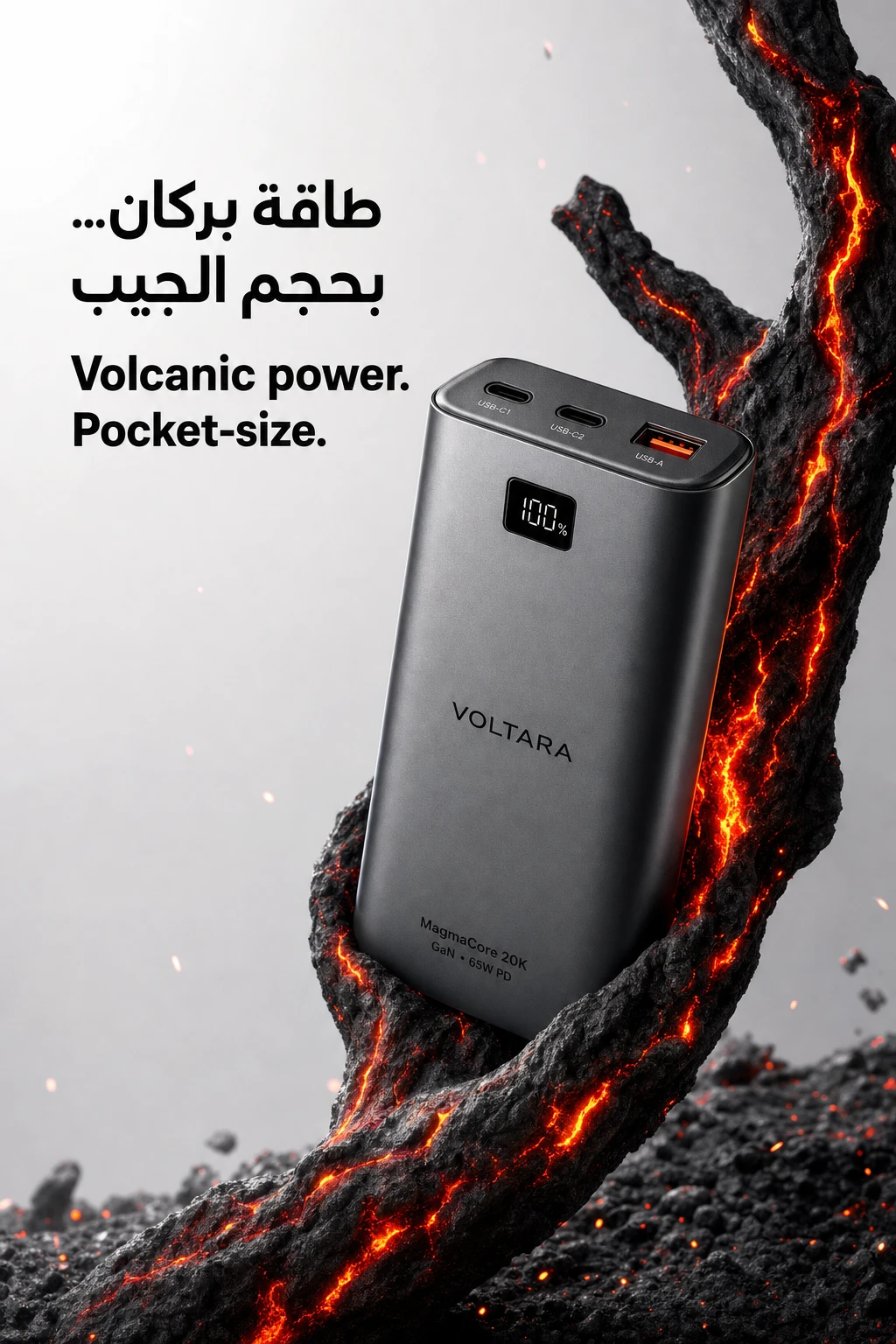
Pre-AI, this decision required a creative director, an Arabic copywriter, a senior typographer, and roughly six weeks of pre-production. Today an SMB owner running a single jewelry brand, a salon chain, or a Salla store can sit down for an afternoon, upload a product photo, pick the dominant language, and have Memm ship the hierarchy + typography pairing automatically — Arabic at the correct line-height and kerning, Latin support set at the matched weight, 70/30 hierarchy preserved across every aspect ratio.
The takeaway
Bilingual isn't a safety net. It is a deliberate hierarchy choice for the small number of cases where two audiences genuinely overlap on one feed — pan-MENA SaaS and fintech, premium GCC hospitality and luxury, cross-Gulf retail with high expat density. In every other case — Saudi-only premium, Egypt, the Maghreb — single-language wins, and adding English is a tax on authenticity.
The deeper rule: the language decision is one of the strategic decisions, not a default. Senior MENA strategists at agencies like Memac Ogilvy, TBWA Raad, and Wunderman MENA treat it as a layer of the brief, not a line in the production checklist. Make the call deliberately. Then commit to the 70/30 hierarchy, the right register, and a typography pairing that doesn't fight the headline. The brand that wins in 2026 will be the one that knew exactly which audience it was talking to — not the one that hedged.
Try this in Memm
Discover bilingual ad designs across MENA categories →
Open Memm (ميم), upload your product photo, pick whether your dominant audience is Arabic-first or English-first, and let the agent build the supporting line at the correct hierarchy. The typography pairing is handled — Naveid Arabic on the Arabic line, the matched Latin face on the English line, line-heights and kerning calibrated by language. You ship the campaign in an afternoon instead of waiting six weeks for an agency to deliver the same hierarchy.
- Browse social-media ad designs in the Memm gallery →
- Read the companion AR perfume-ad playbook (إعلان عطر فاخر) →
- Open Memm Canvas to start a new design →
- See Memm pricing for SMB brand owners →
Sources
- ALTA Language Services — 10 Marketing Translation Fails
- Almarai — HBS Case Study
- Anghami — Wikipedia corporate overview
- Britannica — Arabic language
- Campaign Middle East — Dubai Lynx Advertiser of the Year 2020 (STC)
- Careem — Wikipedia corporate overview
- CSA Research — Can't Read, Won't Buy (2020)
- Global Media Insight — UAE Population Statistics 2026
- Latterly — Saudi Telecom Company Marketing Strategy 2025
- MENA Effie — Winners Archive
- Snappr Enterprise — Food Photography Conversion Data
- Statista — Saudi Arabia Resident Population by Nationality 2025
- Wikipedia — Demographics of Kuwait
Try this in Memm
Make a campaign like this in seconds.
Generate Arabic and bilingual ad visuals from your product photos — no design experience needed.
Open in Memm