Serum vs Cream: Which Hero Composition Sells Faster on Instagram
A serum ad and a cream ad need different hero compositions. Here's how to shoot (or generate) each one so it converts.
From the Memm Editorial Team
Original guides on Arabic ad design, MENA campaign strategy, and bilingual creative direction.
Serum vs Cream: Which Hero Composition Sells Faster on Instagram
A beauty founder in Jeddah ships two Instagram ads on the same Tuesday at the same time, same targeting, same budget. Ad A shows a serum bottle (amber glass, pump top, minimalist design) on a white background with a single water droplet falling. Ad B shows the same serum — but now it's open, the texture visible, the liquid glistening against skin tone. By Thursday, Ad A has 400 clicks. Ad B has 170 clicks. They're selling the same product, but one composition sells 2.3x faster.
The difference is hero composition. Serums and creams have opposite visual needs on Instagram. A serum's value (lightweight, fast-absorbing, concentrated active) lives in transparency, fluidity, and the droplet reveal. A cream's value (rich, nourishing, lasting) lives in density, whippedness, and texture on skin. When you swap these compositions — show a serum as an opaque cream or a cream as a single droplet — you signal the opposite of what you're selling. This article explains the two hero compositions, when to use each, and how to shoot (or generate via Memm) so the composition earns the sale it promises.
Why serum and cream compositions compete for different attention
Serums and creams live in different psychological buckets for MENA skincare customers.
Serums signal: "This is concentrated. A few drops go a long way. Fast-absorbing. Lightweight. For people who want results without heaviness."
Creams signal: "This is nourishing. Full coverage. Rich. Lasting. For people who want to feel the moisture working."
An Instagram ad lasts 2–3 seconds in the scroll. In that window, the composition does almost all the selling. If a serum ad composition looks like a cream (opaque, thick, heavy), the viewer's brain pre-decides "this is too heavy for my skin" and scrolls past. If a cream ad composition looks like a serum (thin, watery, minimal), the viewer pre-decides "this won't be enough for my dry skin" and scrolls past. You sold the opposite product in the same 3 seconds.
MENA beauty audiences are particularly sensitive to composition-message alignment because skincare needs vary sharply by season, climate, and skin type. A Gulf-based serum customer in June (hot, humid, sweating) will dismiss a composition that reads "heavy." A Lebanon-based cream customer in January (cold, dry, heating systems) will dismiss a composition that reads "light." The composition must signal the texture reality before the customer even reads the copy.
The Serum Hero Composition — Liquid, Clarity, The Droplet Reveal
A serum hero composition has four visual priorities:
1. Clarity and Fluidity The product must read as liquid, not opaque. This is achieved by:
- Translucent or clear bottle (amber glass is fine; opaque is not)
- Visible liquid inside (the color of the serum is part of the promise — golden, clear, rose-tinted, whatever it is)
- Droplets, drips, or a wet surface that proves fluidity (a single droplet falling onto skin, or a wet pool on a wrist or leaf, or the bottle nozzle with a fresh droplet hanging)
2. Minimalist Composition Serums are "less is more." The background should be:
- Bright white, pale, or a single soft color (not busy, not patterned)
- Minimal props (the bottle, maybe one droplet, maybe a single leaf or citrus slice if the serum has citrus actives — but only one prop max)
- Plenty of negative space (at least 40% of the frame is empty)
Why? Because the serum's selling point is concentration and potency. Minimalist background says "you need very little of this product." A busy background says "this is decorative, not medicinal."
3. The Droplet Reveal (Most Important) The conversion moment on a serum ad is the droplet. Whether it's:
- A single drop falling from the nozzle onto a surface (wrist, petal, water)
- A drop hanging from the tip before falling
- A wet pool on skin that shows the serum's shine and the skin's glow
The droplet is the appetite trigger. It says "this is the right amount," "this is potent," "this works fast." Motion amplifies it — a 2-second video showing the droplet fall (with audio: a subtle plop or just clean audio silence) is more effective than a still. But a still of the droplet hanging or mid-fall works too.
4. Minimal Color, Maximum Contrast Serums usually have one accent color (the serum's natural color: gold, clear, rose, green). Use that one color and white/pale background. Avoid:
- Multi-colored backgrounds or patterns
- Competing props (multi-colored stones, multi-product flat-lays)
- Warm tones that read as creamy (avoid oranges, peaches, corals paired with serum bottles; instead use cool whites, pale blues, pale greens if accent is needed)
Serum Composition Examples
Good serum hero composition:
- Clear amber bottle, 60% of frame, centered
- Single water droplet falling from nozzle, 10% of frame
- White background, 30% negative space
- Text minimal, placed in the lower third
Poor serum composition (anti-pattern):
- Opaque white bottle, cluttered with stones, dried flowers, and a cream jar
- Beige background
- The droplet is invisible (the nozzle is capped)
- Reads as "decorative," not "concentrated"
The Cream Hero Composition — Texture, Richness, The Skin Application
A cream hero composition has four visual priorities, nearly opposite of serum:
1. Visible Texture and Richness The product must read as nourishing and dense. This is achieved by:
- Opaque or semi-opaque container (white, frosted, or ceramic vessels are ideal)
- Visible texture (the cream is visible, either inside the jar or applied on skin, and you can see it's thick, whipped, rich)
- A skin application moment (the cream is being applied to a wrist, a hand, or a face, so you see the texture on skin, not in a jar)
2. Contextual Richness — Props That Signal Nourishment Creams benefit from supporting props that signal luxury and nourishment:
- A single ingredient (rose petals, shea nuts, honey drizzle, aloe leaf)
- A natural element (stone, driftwood, water droplets on a petal)
- A second product that complements (a serum or oil underneath, or a sunscreen on top)
- Soft textures (silk, cotton, linen, not harsh materials)
Why? Creams are rich, so the composition can be richer. Unlike serums (minimalist), creams signal luxury and indulgence through their surroundings.
3. Skin Texture Visibility (Critical) The most effective cream ads show the cream on skin, not just in the jar. Because:
- Seeing the texture spread on skin proves "this absorbs" and "this feels good"
- A cream in a jar alone can look cheap or caky (especially if the texture is clumpy). The same cream on skin looks luxe.
- On-skin application shots convert because the viewer can imagine using it
Options:
- A hand or wrist with cream applied, being massaged or about to be massaged
- A face (if you're showing a facial cream), with the cream blended, glowing, and hydrated-looking
- Lips (if a lip cream), with the cream applied and glistening
- A fingertip touching the cream in the jar, then the same finger on skin, so the transition is clear
4. Warm Tones and Soft Lighting Creams are warm, nourishing, cozy. The lighting should:
- Be warm (golden hour, tungsten, or warm studio light — not harsh white)
- Show skin as glowing and healthy, not clinical
- Create shadows that feel soft and flattering, not cold
- Use warm background tones (beige, warm white, pale peach, pale gold) paired with cool-toned skin
Avoid cold lighting (harsh midday, cool white, blue tones) which makes cream look clinical and the skin look tired.
Cream Composition Examples
Good cream hero composition:
- Cream jar (open or close-up of texture inside), 40% of frame
- Hand or wrist with cream applied, 40% of frame
- Single prop (rose petals or honey), 10% of frame
- Warm, soft background, golden hour lighting
- Text placed to the side (not covering the skin application)
Poor cream composition (anti-pattern):
- Cream jar closed, sitting alone on white background, 100% clinical
- No skin visible
- No supporting elements
- Cold lighting
- Reads as "product shot," not "nourishment moment"
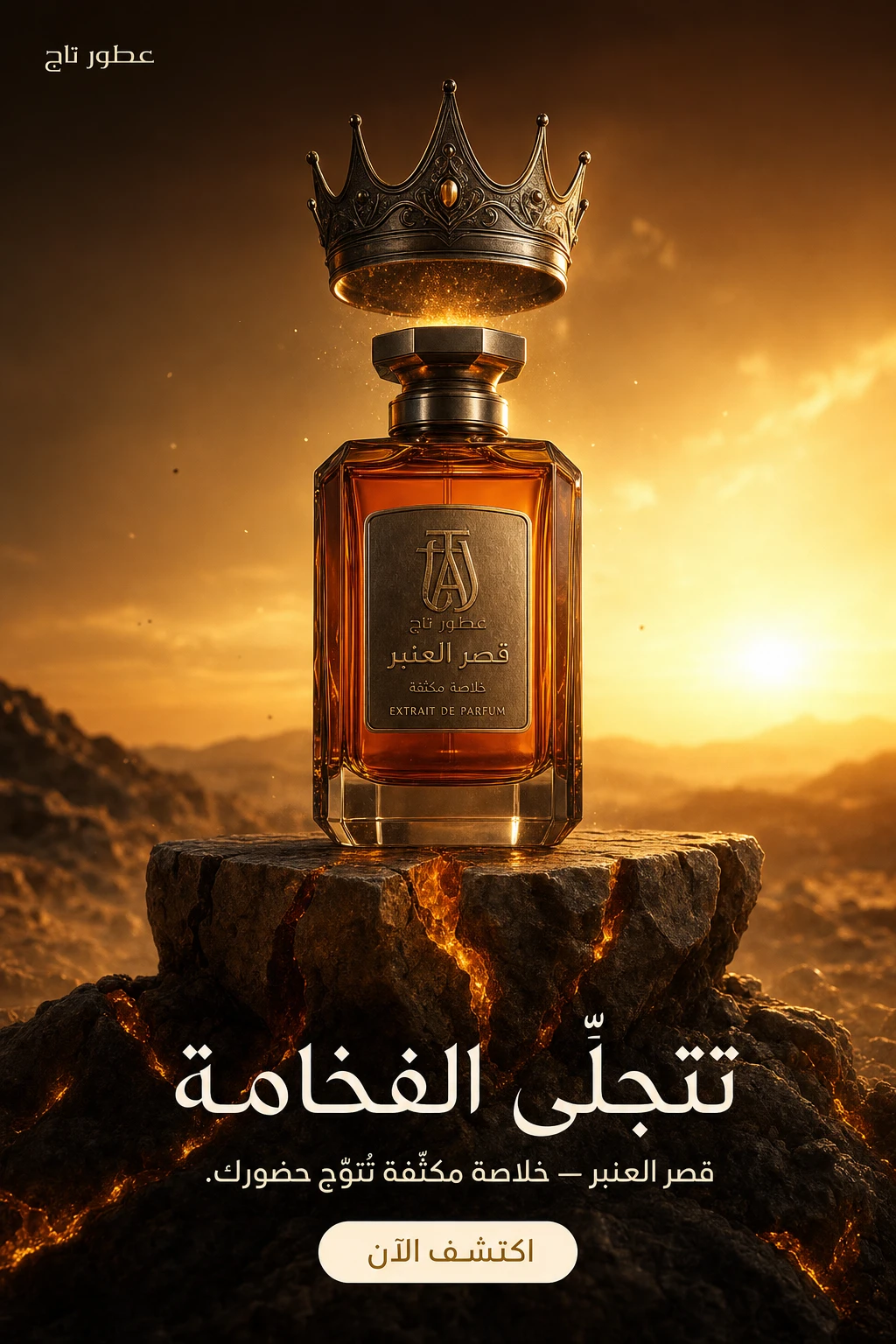
Embed 1: Serum Hero — Droplet Reveal
Embed 2: Cream Hero — Texture on Skin
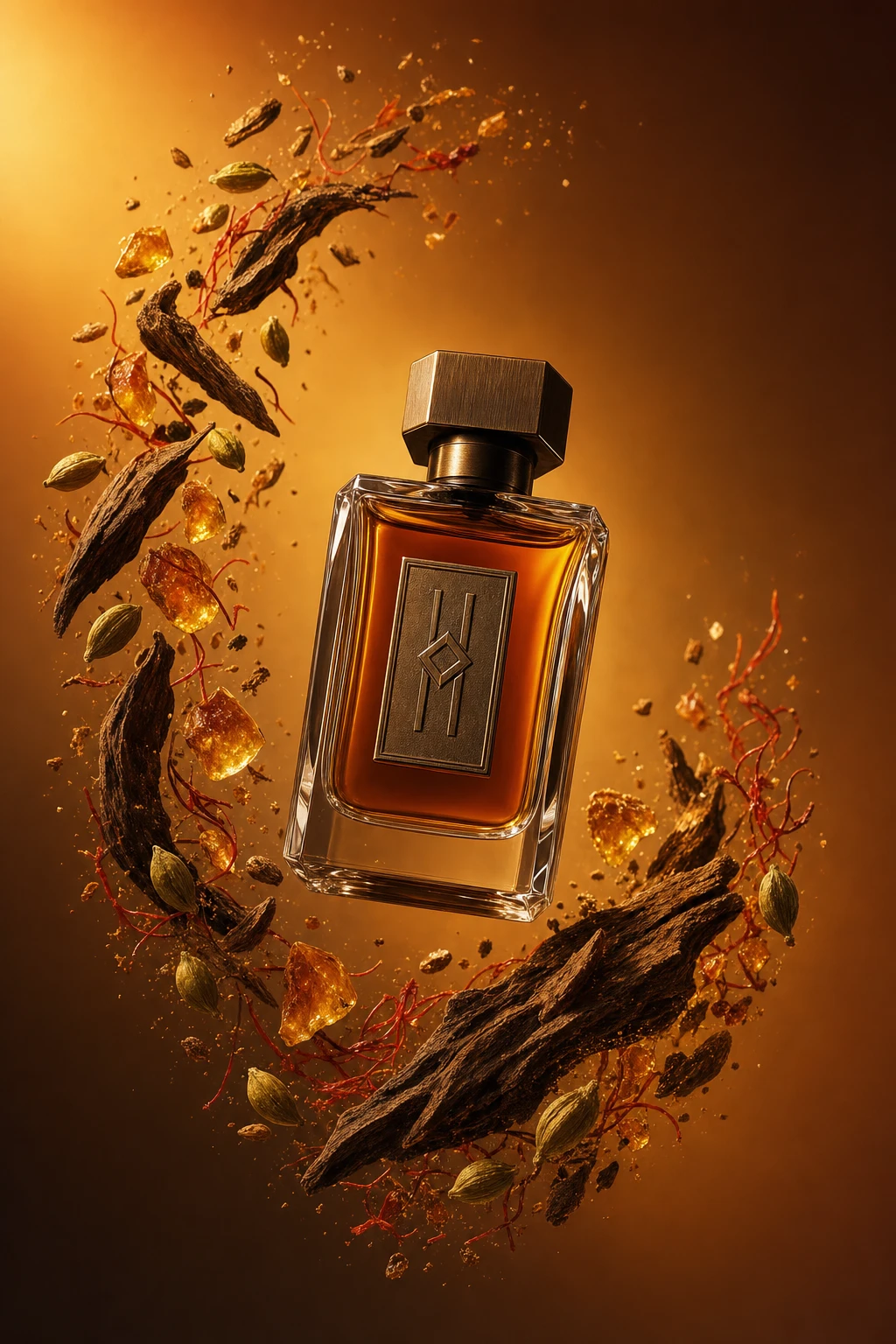
Embed 3: Serum Composition (Flat-Lay, Droplet)
<!-- EMBED_DESIGN missing id=e7495a7f-9f4c-45ab-bcc9-f8db9bb01350 -->Embed 4: Cream Composition (Jar + Ingredient Context)
The Cross-Composition Test: When To Use Each
You have a new product: a hybrid serum-cream (called a "serum-essence" or "cream-serum" — lighter than a cream, richer than a serum). Which composition should you use?
Answer: Test both.
- Post one ad with a serum composition (droplet focus, minimal, white background).
- Post another ad with a cream composition (texture on skin focus, warm background).
- Run them in the same targeting for 48 hours.
- Whichever gets higher click-through rate becomes your go-to.
Most hybrid products convert better with a serum composition (because the "lightweight" signal usually outsells the "richness" signal for new launches in the GCC market in particular). But test, don't assume.
The Bilingual Serum/Cream Ad — Text Placement
If your beauty brand uses both Arabic and English:
- Serum ad: Keep text minimal and in the lower third. Because serum is "concentrated," less text reads as "potent." Place Arabic on the left, English on the right, both pointing inward toward the bottle.
- Cream ad: Text can be richer (two lines each language) and can be placed on the side (not overlaying skin). Arabic on left, English on right, both outside the application area.
What Memm Does Best Here
If you upload a serum product photo to Memm:
- Specify "serum hero composition, droplet reveal, white/minimal background, high contrast, Arabic + English text"
- Memm routes to Nano Banana Pro (handles fine detail like droplets and liquid clarity)
- Output will have visible liquid, droplet focus, and minimalist framing
If you upload a cream product photo:
- Specify "cream hero composition, texture visible, warm golden lighting, on-skin application moment"
- Memm will include supporting elements, warm tones, and skin texture
- Output will signal richness and nourishment
Avoid These Serum/Cream Confusion Patterns
Anti-pattern 1: Serum Composition With Cream Product You're selling a rich night cream but the ad shows it as a single droplet on a white background. Viewer thinks "this is too thin for my dry skin" and scrolls. Lose the sale.
Anti-pattern 2: Cream Composition With Serum Product You're selling a lightweight hydrating serum but the ad shows it thick, whipped, applied to skin with a massage motion. Viewer thinks "this will be too heavy" and scrolls. Lose the sale.
Anti-pattern 3: Opaque Serum Bottle (Closes The Liquid Narrative) A serum in a frosted or opaque bottle reads as uncertain — the viewer can't see the liquid, so they can't confirm it's lightweight. If your serum comes in an opaque bottle, the composition solution is: open the bottle, show the interior, or show the droplet on a different surface (wrist, petal, water). Transparency (literal or compositional) is the serum's hero.
The Operating Principle
Serums sell on clarity, lightness, and the reveal. Composition must be minimal, bright, and show the droplet or the liquid. The fewer elements, the more potent the signal.
Creams sell on richness, nourishment, and the application. Composition can be richer, warmer, and must show the texture on skin. The more you see it work, the more you want it.
When you're shooting (or generating) a beauty ad, ask first: "Am I selling serum energy or cream energy?" The answer determines your entire composition — background, props, lighting, text placement, and the 3-second appetite moment.
Next Step
If you sell both serum and cream, open Memm and generate two ads:
- "Serum composition, amber bottle, droplet reveal, white background, minimal elements"
- "Cream composition, texture on skin, warm golden light, rich nourishment aesthetic"
Post both to Stories as an A/B test. Track saves and clicks for 48 hours. The composition that wins becomes your template. Use it for every serum launch, every cream launch, across your product line.
Try this in Memm
Make a campaign like this in seconds.
Generate Arabic and bilingual ad visuals from your product photos — no design experience needed.
Open in MemmKeep reading
beauty-cosmetics
كيف تصور قارورة عطر بدون استوديو: دليل المصمم في البيت
الضوء والخلفية والزاوية — ثلاثة عناصر فقط تفصل بين صورة عطر تبدو احترافية وصورة تبدو بدائية. لا تحتاج إلى استوديو.
6 min readbeauty-cosmetics
Oud, Amber, Musk: A Visual Vocabulary for Western Buyers
Arabian oud sells to three audiences. Each sees a different image. Here's how to compose the bottle, the bottle-top shot, and the atmosphere so Western buyers feel the heritage without feeling excluded.
10 min readbeauty-cosmetics
إعلان كريم مرطب على انستغرام: ما يصلح للسوق السعودي بالفعل
ما يراه الزبون في إعلان الكريم هو ما يحدّد إن كان سيمرّ مرور الكرام أم يسحب البطاقة. ستة قرارات تصميمية تصنع الفرق.
6 min read